

What began as an online reaction has rapidly evolved into one of the most fascinating cultural moments India has witnessed on the internet in recent times.
The rise of the “Cockroach Janta Party” came shortly after controversial remarks comparing sections of unemployed youth to “cockroaches.” Within hours, the internet absorbed the statement and transformed it into a symbol of collective frustration, identity, and digital resistance.
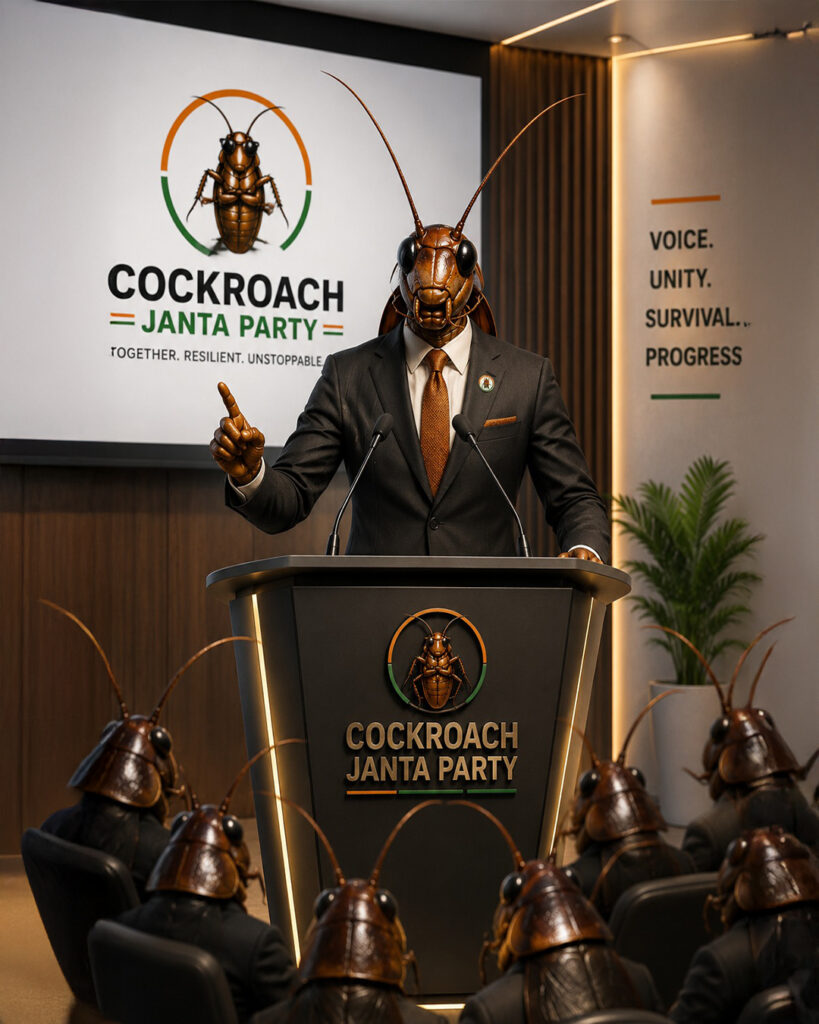
What makes this moment significant is not whether this becomes an actual political party. It is what the response reveals about the emotional and cultural condition of a generation.
And if she hasn’t been rewritten, then they are still using her
The virality of this movement reflects rising unemployment anxiety, economic pressure, political distrust, and a growing disconnect between institutions and younger citizens. But unlike previous generations, Gen Z and younger millennials no longer communicate dissent through only traditional political language. Their vocabulary is built through memes, visuals, irony, design, reels, and internet culture.
The word “cockroach” itself became symbolic because it unintentionally represented survival. Something ignored, looked down upon, yet impossible to erase. The internet immediately reclaimed the insult and converted it into collective expression.
Far far away, behind the word mountains
This is where the phenomenon becomes culturally important.

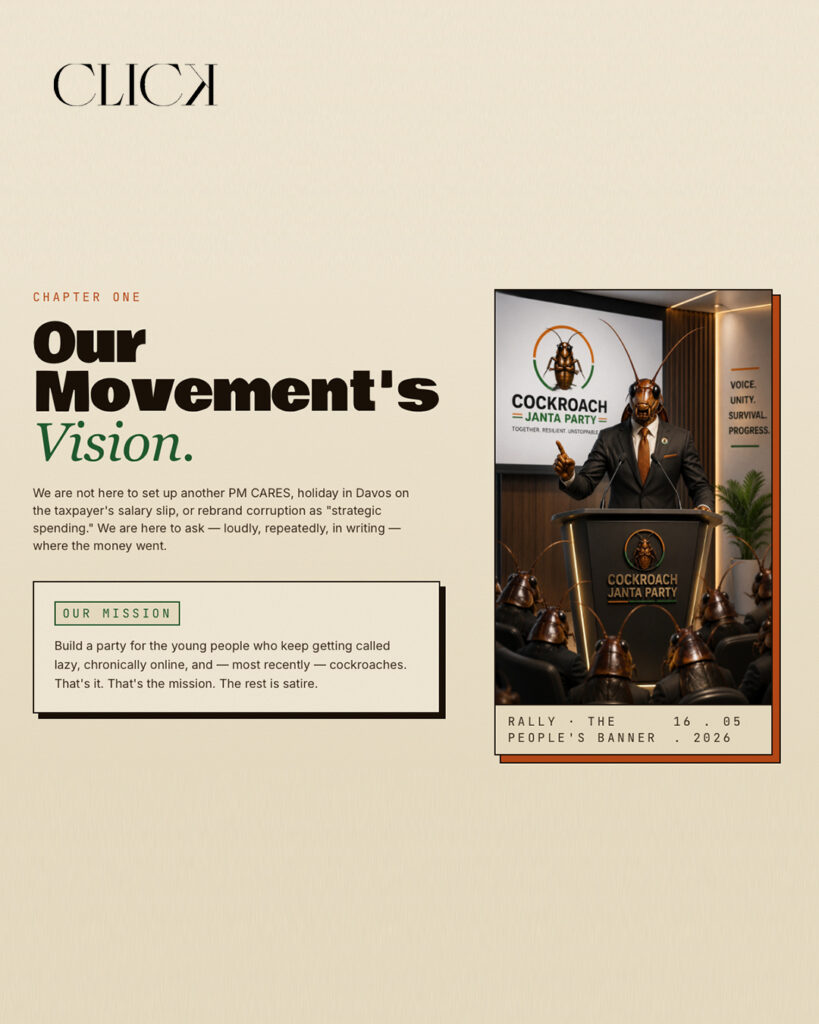
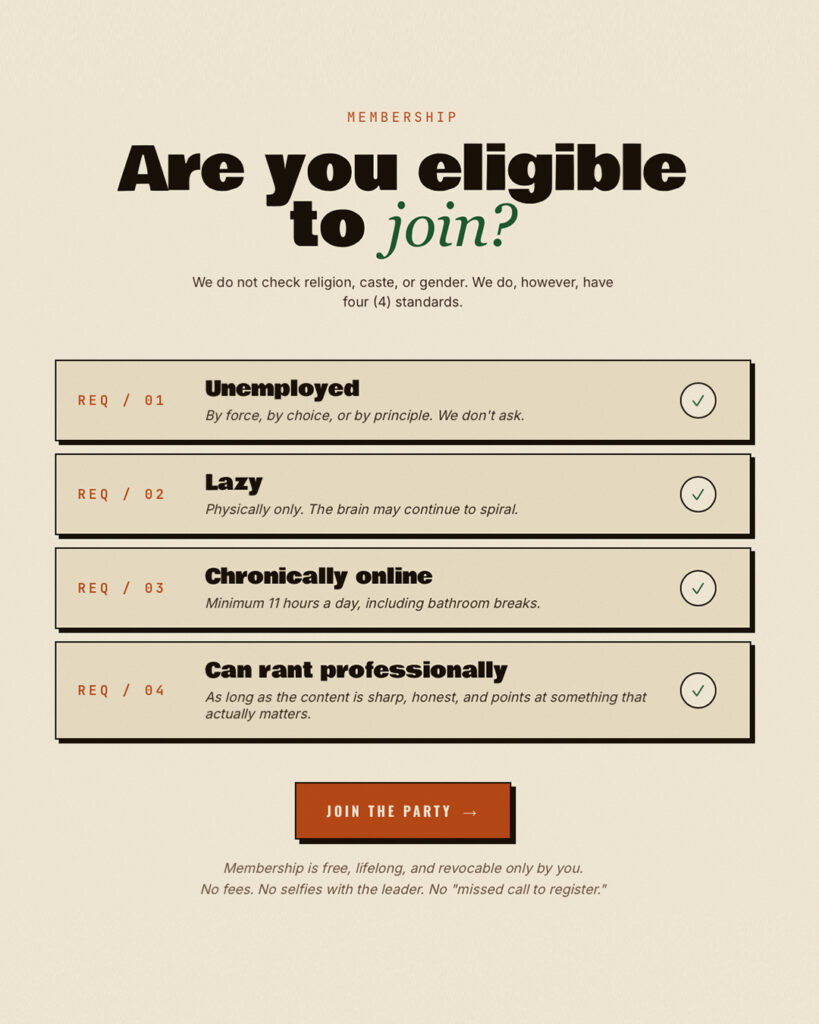
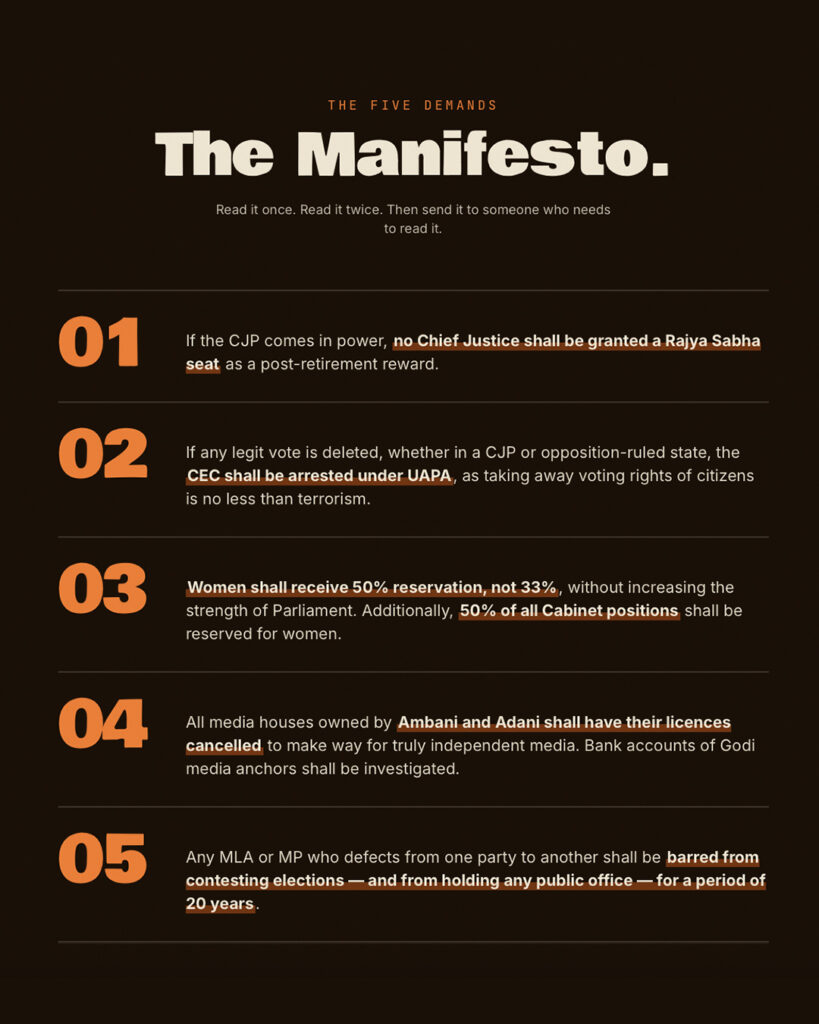
Political communication today is changing shape. Public frustration no longer appears only through speeches, protests, or television debates. It now travels through Instagram carousels, satirical campaign graphics, viral captions, manifesto slides, and online communities that understand humour and anger simultaneously.
The visual identity of the “Cockroach Janta Party” also explains its rapid spread. Its branding feels modern, internet-native, and emotionally relatable to younger audiences. It looks less like conventional politics and more like a movement designed by the digital generation itself.
Within days of going viral, the “Cockroach Janta Party” reportedly attracted tens of thousands of online supporters, with membership numbers rapidly climbing across Instagram and X. The movement also caught the attention of public figures and politicians, including reactions and engagement from leaders like Mahua Moitra, & Kirti Azad further pushing it into mainstream political conversation.
Separated they live in Bookmarksgrove right at the coast of the Semantics, a large language ocean.
More importantly, this incident reveals how deeply online culture now shapes public discourse in India. The internet no longer just reacts to politics, it reframes it, redesigns it, and redistributes it through culture.he word “and” and the Little Blind Text should turn around and return to its own, safe country.
Whether the movement disappears in a few weeks or evolves into something larger is secondary now. Its existence has already exposed a larger truth:
India’s younger generation does not want to passively consume political narratives anymore. It wants to reinterpret them, challenge them, and turn them into cultural language of its own.
Leave a Reply